


A New Algorithm Helps Track Calories Burned for People With Obesity
Dec. 1, 2025
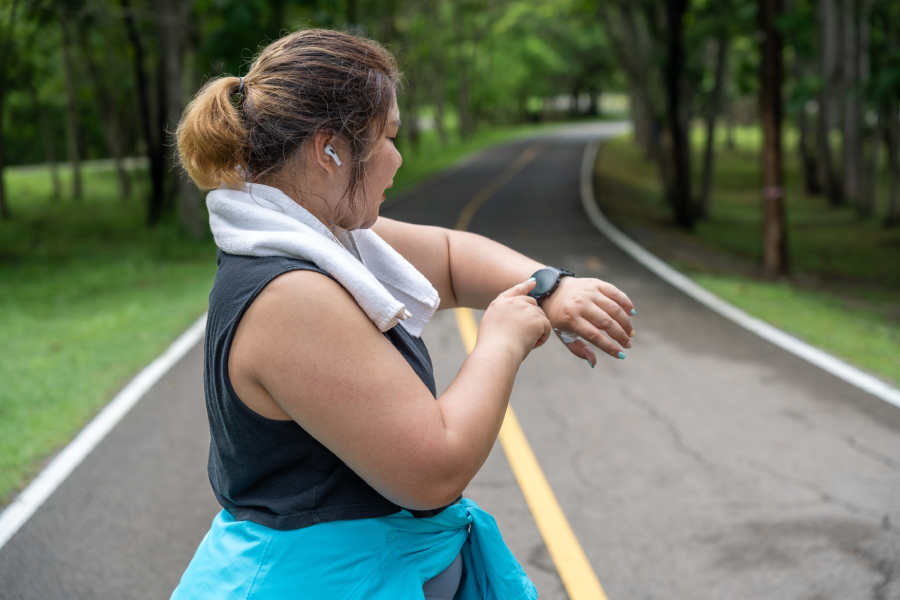
(Shutterstock)
NIH-supported researchers have created an open-source, machine learning algorithm (a free tool to study and understand data) that can be used in wrist-worn tools, such as smartwatches, to better track how many calories people with obesity burn during physical activity. People with a higher body mass index (BMI) often have different walking patterns, speeds and body postures than people without obesity, and they use energy differently while at rest. Because of these differences, most fitness trackers worn on the hip or wrist of people with higher BMIs do not accurately measure the number of calories burned.
Support from the NCATS-funded Northwestern University Clinical & Translational Sciences Institute (NUCATS) was vital for this research study. Led by Nabil Alshurafa, Ph.D., associate professor at Northwestern University, a team of researchers looked at this issue and created a more precise tool to measure how many calories people with obesity use.
The study had two parts: one in the lab and one outside the lab. In the lab, 27 people with obesity wore a smartwatch, hip-worn activity tracker and a metabolic cart (a device with a face mask that measures the amount of oxygen breathed in and carbon dioxide breathed out to calculate energy use). Outside the lab, 25 different participants with obesity wore both a smartwatch and a chest-worn camera to capture their daily activities. Altogether, the 52 participants performed a variety of common tasks — including sitting, typing, eating, driving, walking and exercising.
The research team collected more than 16,000 minutes of data. To double-check the results, they carefully reviewed 573 minutes of the data by hand to confirm how much energy people used. This step helped them spot when the algorithm overestimated or underestimated energy use to improve its accuracy. When tested, the wrist-worn device worn on the dominant hand was more accurate than 11 existing algorithms already in use. Importantly, this was the first study to evaluate such tools specifically in people with obesity. The researchers published their findings in Scientific Reports.
“We turned everyday smartwatches into more accurate calorie burn trackers for people with obesity,” stated Dr. Alshurafa.
Being able to trust what a device shows about calories burned is an important step for people who want to manage their weight. With this new algorithm, wrist-worn devices will give people with obesity more accurate results. That accuracy could help people with higher BMIs feel more confident about using the devices regularly and sticking with them over time.
Most calorie-tracking algorithms are owned by private companies, which limits data sharing. It also hinders upgrades that could help different types of people. In contrast, the algorithm made by Dr. Alshurafa’s team is freely available in the GitHub repository, an online platform where people share computer code. They also posted the study data on Zenodo, a public data storage site. These steps make it easier for doctors and scientists to test and use the tool in both research and clinical studies. Wider use of the algorithm can help make it even more accurate and increase its suitability for more people. “Clinicians now have a low-cost, accurate tool that can be run on any smartwatch. This will enable more personalized, scalable care for obesity treatment and all conditions that are impacted by obesity,” explained Dr. Alshurafa.
Michael Kurilla, M.D., Ph.D., director of NCATS’ Division of Clinical Innovation, which administers the Clinical and Translational Science Awards (CTSA) Program, stated, “Putting more accurate data in the hands of patients and their health care providers will go a long way to addressing the obesity epidemic in this country.”