


Neuroimmune Signaling Between the Heart and the Brain May Contribute to Heart Attack Damage
April 10, 2026
(NCATS)
Nearly every 40 seconds, somebody in the United States has a myocardial infarction — better known as a heart attack.1 A heart attack occurs when a coronary artery — which brings oxygen to the heart — becomes blocked, cutting off oxygen and causing cell death. Current treatments, such as a coronary artery bypass surgery, can be invasive. Heart attacks remain a leading cause of death, even with advances in treatment. Understanding biological changes triggered by such attacks is key to improving therapies for patients.
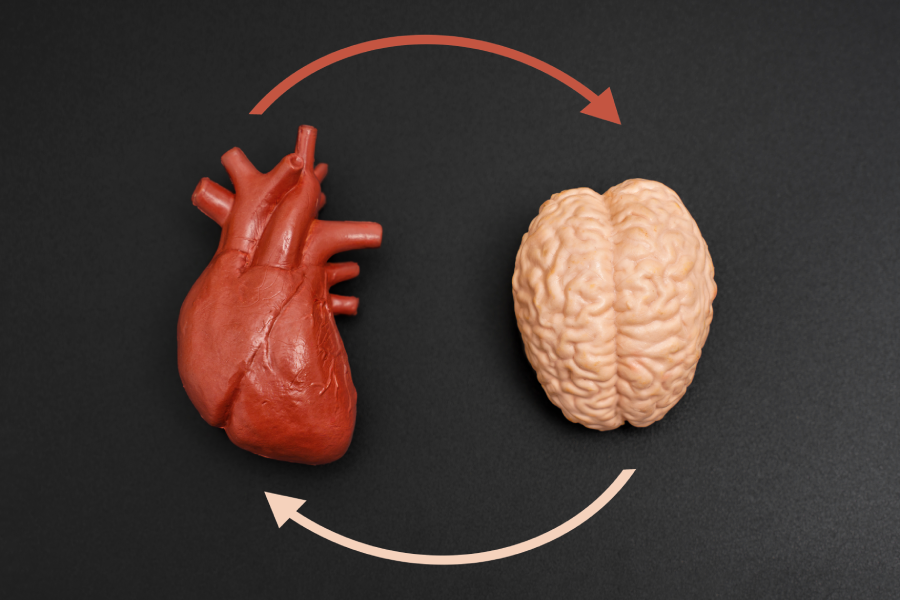
Two-way communication between the heart and the brain plays a vital role in health and disease. These organs send signals to each other using several different systems, including the nervous and immune systems. Supported by NIH NCATS through the Scripps Translational Science Institute, Vineet Augustine, Ph.D., assistant professor at the University of California, San Diego, previously mapped out the cardiac sensory neurons in the heart and wanted to understand the role of these different neurons in heart disease.
Led by Augustine, a collaborative team of researchers looked at the role of sensory neurons and immune signals in a preclinical model of heart attacks. The team members published their findings in Cell. They found that after a heart attack, (1) the number of cardiac sensory fibers via the vagus nerve in the heart increases, and these fibers surround the injured area; (2) a set of neurons in the brain’s hypothalamus involved in cardiovascular functions was found to increase activity; and (3) sympathetic cervical ganglia — neuronal cell bodies that help carry signals — in the neck that extend to the heart expressed more interleukin 1 beta (known as IL-1β), an inflammatory cytokine. When each of these three activities was individually blocked, injury to the heart was greatly reduced after a heart attack.
These key findings show how a triple-node loop involving the heart, brain, nervous and immune systems worsened tissue damage and heart function. This highlights how heart attacks are not just a problem of the heart. Augustine stated, “It also is a problem of improper signaling of the nervous system and immune system. A heart attack is a multifaceted problem, and there can be different ways to develop therapies to treat it.”
Cutting-edge techniques, such as spatial transcriptomics, were vital for this study. “Like how a computer screen is made up of small, individual pixels, spatial transcriptomics allows you to divide any tissue into small, pixelated areas to form a map of the tissue based on gene expression,” explained Augustine. These advanced methods helped the team understand in detail how targeting different neural and immune pathways affected heart function and cell types within the heart. In addition, Augustine noted that the publication in Cell and data are open access, so other researchers can use this study as a blueprint to understand the role of neurons in other heart diseases or any organ of the body.
Michael Kurilla, M.D., Ph.D., director of NCATS’ Division of Clinical Innovation, which administers the Clinical and Translational Science Awards (CTSA) Program, stated, “Understanding the relationships between the heart, brain, as well as the nervous and immune systems can identify novel targets for future treatments for cardiac events.”
1 Heart Association: What is a heart attack? [Internet]. [updated 2024 December 10; cited 2026 March 4]; Available from: https://www.heart.org/en/health-topics/heart-attack/about-heart-attacks