


Rare Disease Day at NIH 2026: Paving the Way to a Brighter Future for All Americans
March 31, 2026
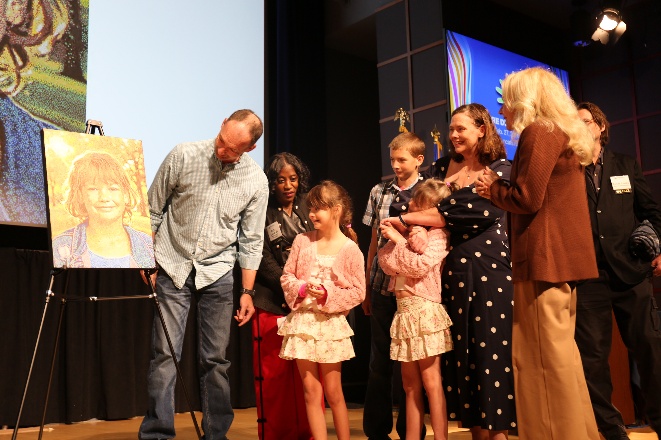
Beyond the Diagnosis portrait reveal. (NCATS)
On Feb. 27, 2026, nearly 2,300 people — including patients, caregivers, researchers, clinicians, regulatory staff and advocates — filled the halls of the NIH Natcher Conference Center or joined virtually on NIH VideoCast to celebrate Rare Disease Day (RDD) at NIH. This annual event showcased breakthroughs in rare diseases research, with a focus on how new therapies have affected patient experiences, including an appearance by the world’s first patient of a gene editing therapy, “Baby KJ.” Session topics included NCATS rare diseases programs and resources updates, innovative clinical trial designs, the possible applications of artificial intelligence (AI), and advances in treatment options. The event also hosted 114 exhibits, displayed artwork and had interactive activities.
Speakers at RDD highlighted that rare diseases are not truly rare and remain a major public health challenge. Millions of Americans are living with a rare disease, and more than 10,000 rare diseases have been identified. Unfortunately, approximately 30% of children with a rare disease do not live past their 5th birthday. NCATS’ efforts in rare diseases research are central to NIH’s mission of combating chronic diseases and improving the health of all Americans.
During his remarks, NIH Director Jay Bhattacharya, M.D., Ph.D., emphasized, “The biology of rare diseases and the knowledge gained from studying rare diseases translates over to many other conditions. Huge advances in biological knowledge have come from studying rare diseases.”
Increasing Screening Efforts to Shorten the Diagnostic Odyssey
NCATS is collaborating with government, academic groups, industry and patient communities to build platforms and scale strategies that shorten the time to diagnosis and identify a clear path to treatment. “It’s collaborations that become cures,” emphasized NCATS Director Joni L. Rutter, Ph.D.
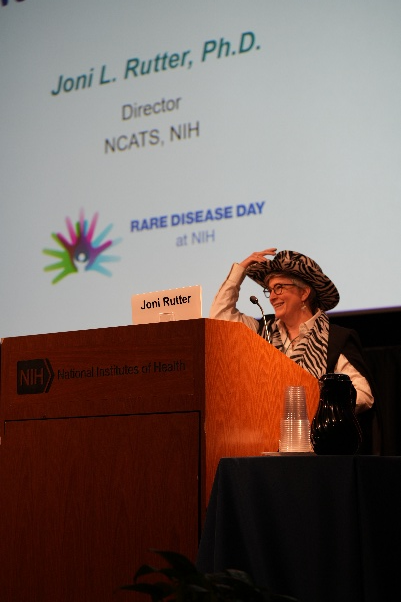
NCATS Director Joni L. Rutter, Ph.D., presenting during Rare Disease Day at NIH. (NCATS)
If a child’s mutation is found early, care could begin sooner. In December 2025, screening tests for two diseases — Duchenne muscular dystrophy and early-onset metachromatic leukodystrophy — were added to the Recommended Uniform Screening Panel for newborns.
NCATS, the National Human Genome Research Institute, and the Eunice Kennedy Shriver National Institute of Child Health and Human Development have partnered to support a new NIH Common Fund study — Building Evidence and Collaboration for GenOmics in Nationwide Newborn Screening — to examine the possibility of adding whole genome screening to newborn screening programs. “Screening matters. Screening leads to detection, and detection leads to diagnosis,” said Rutter.
Successful Innovative Techniques to Treat Rare Diseases Patients
The stories told by patients and their caregivers highlighted the significant impact rare diseases can have on individuals, their families and their communities. Advocacy, resilience, public-private partnerships, collaborations and innovation were central themes in the stories.
Jake Juip, a student in the College of Creative Studies, lives with Friedreich ataxia (FA), a slowly progressing neuromuscular disease. As a child, he was able to participate in everyday activities like flying a kite and gymnastics. Over time, however, FA has led to complications affecting his heart, back, speech, vision and dexterity, requiring the use of assistive devices. He is now a full time wheelchair user, and even routine tasks — such as getting dressed and brushing his teeth — can be difficult. Despite these challenges, Juip has persevered. The first FDA-approved drug for FA enables Juip to live alone while he attends college classes, though he emphasizes that this treatment is only the first step toward a broader solution for individuals with FA. “Over 95% of [rare diseases] don’t have a cure,” noted Juip. While this statistic is high, he remains optimistic for the future, citing the promise of NIH-supported research on rare diseases. Motivated by this hope, Juip actively advocates for rare diseases research and participates in clinical trials to help advance progress for FA and other rare conditions.
Lindsay Guentzel shared the daily challenges she faced living with dermatomyositis associated with antisynthetase syndrome. She also described her participation in a CAR-T cell therapy clinical trial, which has resulted in disease remission since November 2025. CAR-T cell therapy helps reboot the immune system so that T cells can find and destroy harmful cells that attack the body and cause disease. Since 2010, NIH has supported studies of CAR-T cell therapy for various cancers. These research efforts have led to seven U.S. Food and Drug Administration (FDA) approvals of CAR-T cell therapy treatments. CAR-T therapies are now also being studied as potential treatments for rare diseases.
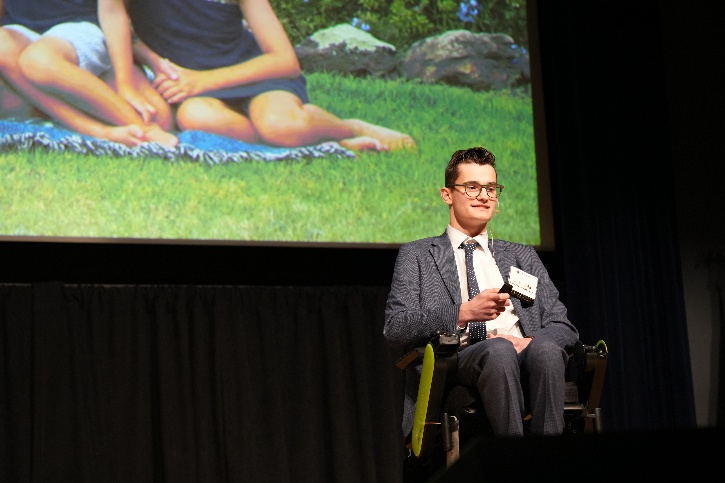
Jake Juip providing his story about living with a rare disease. (NCATS)
Juvenile myositis (JM) is an autoimmune disease that causes severe muscle weakness and other symptoms. The disease can be disabling and life threatening, and no FDA approved treatment is available. Jim Minow, executive director of the Cure JM Foundation, shared his excitement that CAR-T cell therapy might be able to treat JM. “NIH leadership has provided the fundamental tools that make clinical trials — and not just CAR-T clinical trials but also trials for biologics and JAK inhibitors — possible,” said Minow.
The first CAR-T cell treatment of a child with JM has shown promising results. This study has offered hope to families and encouraged more to consider enrolling in clinical trials. In addition, Janus kinase (JAK) inhibitors are also being tested as a potential treatment for children with JM. Leah Kania stated, “As a parent of a child living with juvenile myositis, I have seen firsthand how essential partnership is to progress. Through Cure JM’s partnership with NCATS and NIH, promising treatments like JAK inhibitors are moving forward and helping reduce the need for steroids in children with JM. That was a game changer for our daughter.”
Personalized gene editing therapy, another potential treatment for some rare diseases, had a historic breakthrough over the past year with a patient known as “Baby KJ.” KJ Muldoon was diagnosed with a severe carbamoyl phosphate synthetase I deficiency disease. This metabolic disease does not allow the body to break down proteins properly, resulting in excessive accumulation of ammonia in the blood. KJ’s mother, Nicole Muldoon, explained that KJ’s ammonia level was tested at 24 hours after birth, and he was on dialysis soon after. She described her careful decision-making process when considering either a personalized gene-editing therapy treatment or liver transplantation for KJ. Muldoon and her husband reviewed the risks and benefits of both treatment options. She emphasized that the open line of communication with the clinical team helped her feel comfortable about the decision they were making. Muldoon highlighted that the gene therapy has allowed KJ to eat more protein, resulting in him meeting milestones and experiencing a growth spurt.
Designing New Clinical Trials and Exploring More Treatment Avenues
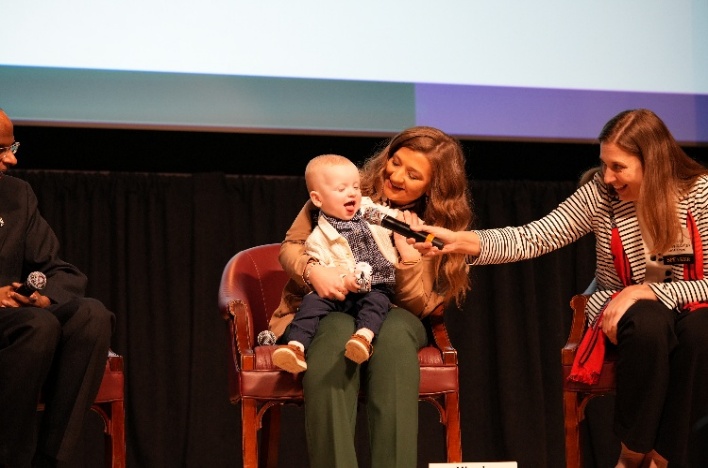
Rebecca Ahrens-Nicklas, M.D., Ph.D., with Nicole Muldoon and her son KJ Muldoon during the gene therapy panel. (NCATS)
Speakers also discussed how researchers are addressing the challenge of small patient populations for individual rare diseases. NCATS is helping meet the need for improved models, platforms and data in rare diseases research through activities such as i3D Rare and the Oligonucleotide Toxicity (OligoTox) Open Data Challenge. Researchers are developing 3-D cell models using patient samples to accurately mimic characteristics of the rare disease. The Bespoke Gene Therapy Consortium is a public private partnership that will speed up the creation of gene therapies for rare diseases and streamline regulatory paths for these treatments.
Several innovative clinical trial designs are now being used in rare diseases research. In an umbrella trial, multiple drugs are tested for a single disease. In contrast, a basket trial evaluates the effectiveness of one drug across multiple diseases. Adaptive trials allow researchers to modify trial strategies based on early findings. “We need to do things more than one disease at a time,” highlighted Philip John (P.J.) Brooks, Ph.D., acting director of NCATS’ Division of Rare Diseases Research Innovation. These clinical trial designs are faster and more efficient because research can be done in parallel rather than in sequence.
Because rare diseases often affect small patient populations, customized clinical endpoints are essential. In addition, patients with the same rare disease may experience a wide range of symptoms. As a result, clinical trials often compare a patient’s clinical features with their baseline measurements to determine whether a treatment is effective. Drug repurposing — using approved drugs to treat different diseases — is another area of research for rare diseases. Although repurposed drugs, such as JAK inhibitors, have shown promise for some rare conditions, obtaining these treatments through off-label use can be difficult for patients. Innovative clinical trial designs may help researchers gather the data needed to support FDA approval of the repurposed drugs for rare diseases, ultimately improving patient access to care.
Using Artificial Intelligence From Diagnosis to Treatment
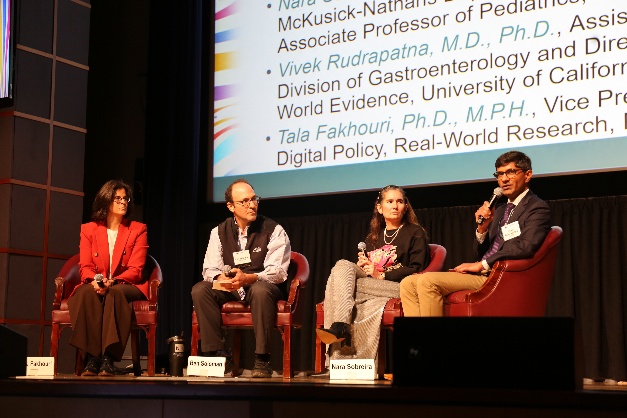
Tala Fakhouri, Ph.D., M.P.H.; Benjamin Soloman, M.D.; Nara Sobreira, M.D., Ph.D.; and Vivek Rudrapatna, M.D., Ph.D. (NCATS)
Diagnosing rare diseases based on clinical features alone can be challenging due to their complexity. To improve diagnostic accuracy, clinicians often combine observed clinical features with patient sequencing data, an approach known as reverse phenotyping. AI tools have the potential to further enhance this process by making diagnoses faster and more accurate. Using real-world data with AI can help improve outcomes for people with rare diseases. Electronic health records provide valuable longitudinal data, enabling researchers to develop customized AI tools. New technologies and methods are also being developed to structure, integrate, and appropriately weight these data for AI model development and training. NIH has invested in important resources — including NCATS’ Genetic and Rare Diseases (GARD) Information Center — that can support these efforts by connecting clinicians and scientists to rare diseases literature and data.
Speakers noted several challenges with AI tools that still need to be addressed. Many tools are cloud-based, raising concerns about data privacy and security. In addition, AI tools can be costly, and standard models often require customization, which is not always practical. Experts also emphasized that precise quantification of disease risks should be incorporated during tool development. Finally, rare diseases data are often limited and inconsistent, which can pose challenges for training accurate AI models.
Speakers also highlighted that once barriers related to data infrastructure and genetic testing are addressed, medical AI tools could significantly improve the lives of people with rare diseases. Overall, AI has the potential to educate clinicians, accelerate research, enable more proactive monitoring and optimize treatment strategies.
For More Information: Rare Diseases Research and Resources
RDD at NIH showcased many research and educational resources. The community can access and learn more about other NIH and NCATS rare diseases resources, including the following:
Genetic and Rare Diseases Information Center
Platform Vector Gene Therapy (PaVe-GT) Pilot Project
Rare Diseases Clinical Research Network (RDCRN)
Rare Diseases Registry Program (RaDaR)
Somatic Cell Genome Editing (SCGE) Program
Therapeutics for Rare and Neglected Diseases (TRND)
NCATS Toolkit for Patient-Focused Therapy Development
RARe-SOURCE