

Translational Science Resources
We offer a variety of resources that you can use to better understand translational science and the challenges it is addressing.
Our Translational Science Resources
Translational science is the field that generates scientific and operational innovations that overcome the long-standing barriers along the translational research pipeline. By advancing translational science, we can improve the process of turning research observations into health solutions and ultimately bring more treatments to all people more quickly. Explore these resources to learn more about translational science.
Translational Science Infographic
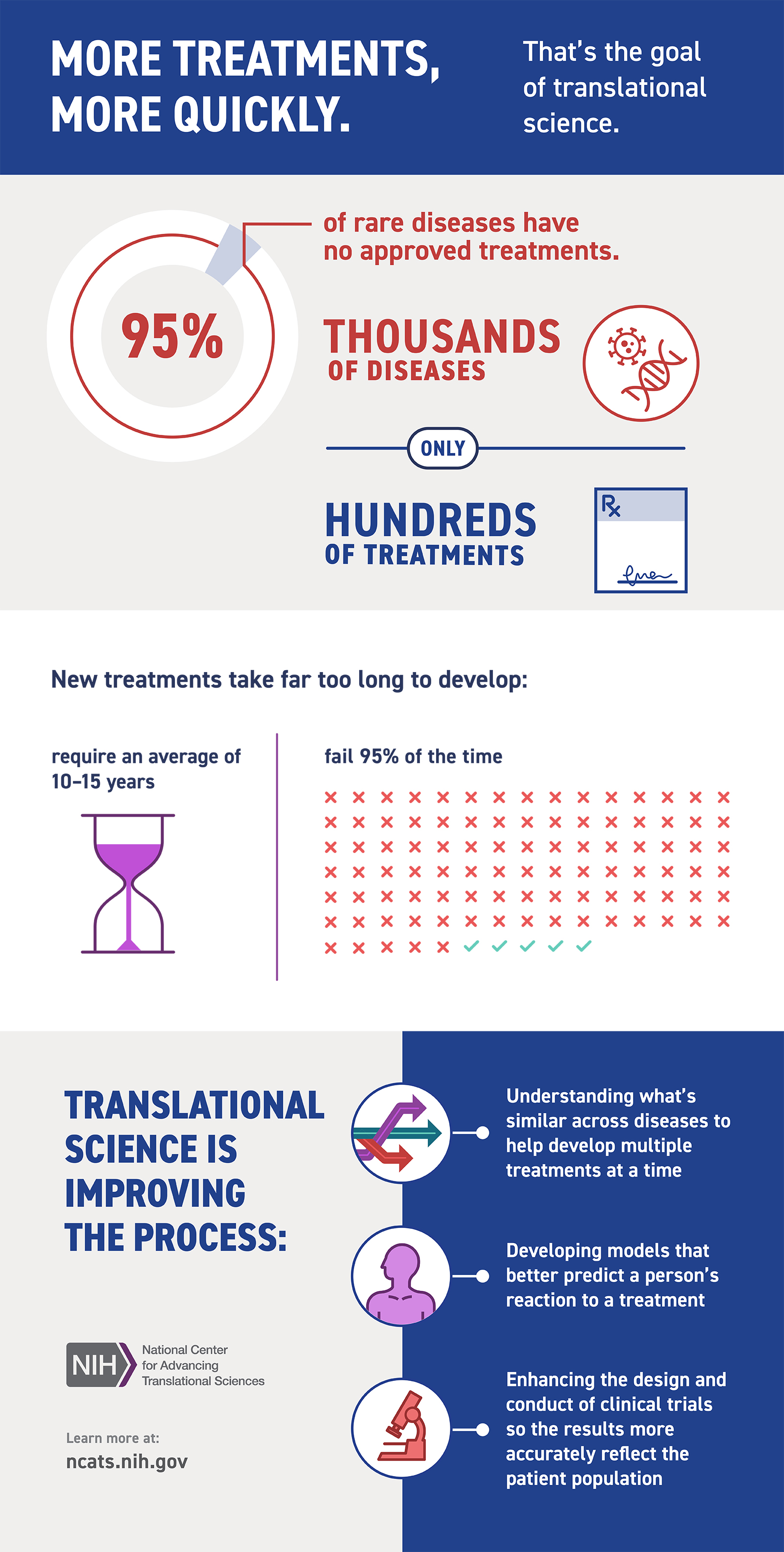
Developing new treatments can take a very long time. This infographic highlights some of the challenges as well as translational science approaches we’re using to overcome them.
Translational Science Infographic
Demystifying Drug Development: An Illustrated Knowledge Guide
Historically, the focus on including all people in biomedical research was most often applied within the context of clinical research or health care delivery. The preclinical environment — situated in the center of the biomedical research ecosystem and bookended by clinical research and health care delivery — was generally excluded because of the presumed objectivity of bench science research in this phase. This presumed objectivity led to a lack of attention paid to the impact of broader infrastructural and global challenges in understanding rare diseases, and the importance of including all people in biomedical research. NCATS recognized the need to address these considerations in the preclinical research phase and identified ways to begin understanding and addressing these gaps. The Therapeutic Development Branch (TDB) of NCATS’ Division of Preclinical Innovation embarked on an initiative to engage more communities into preclinical research and drug development, with rare diseases as an exemplar.
Rare disease patients, advocates, community knowledge interpreters and research partners reported unfamiliarity with the specifics of the drug development phase and requirements to proceed after initial drug discovery. They conveyed a need for educational resources that describe the preclinical journey and detail the drug development process.
To address this educational gap and respond to partner feedback, TDB developed a Knowledge Guide. This resource was created to help partners become familiar with the preclinical phase of the drug development process. The Guide is expected to inform and engage a broad audience, reduce knowledge gaps, and help to include all people and communities in biomedical research, especially for rare disorders.
The Knowledge Guide illustrates the drug development journey, starting from when a drug candidate is chosen. A team of multidisciplinary scientists uses project management best practices to move through a two-stage, preclinical process toward clinical development (Figure A). Paired with Figure A is a step-by-step description of how scientists develop a drug that will be safe to test in humans (Figure B). The Guide also includes key concepts and highlights an ecosystem that conveys the importance of engaging all communities throughout the span of preclinical biomedical research (Figure C).
NCATS is making these materials available for use via a CC BY-ND 4.0 License.
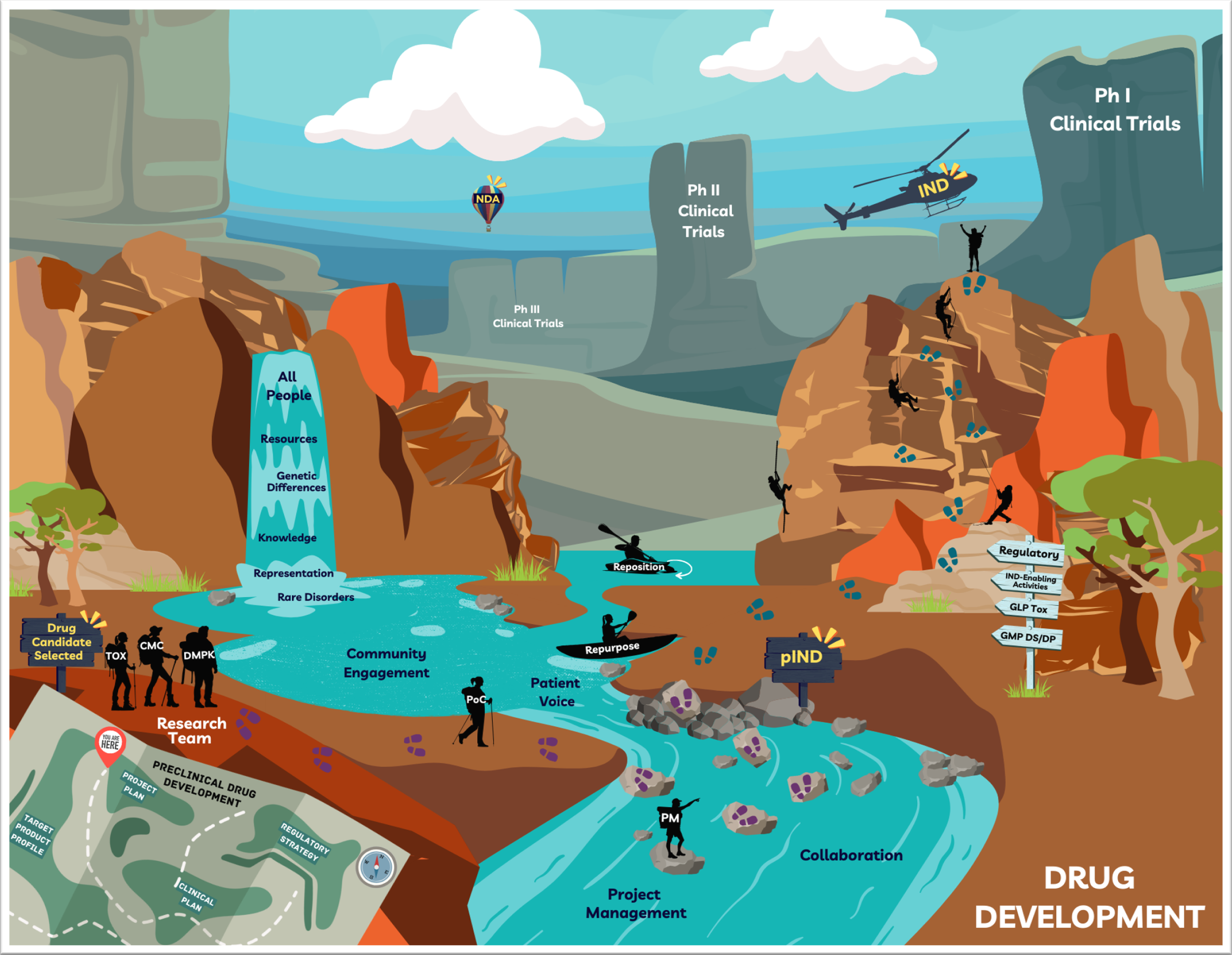
Figure A
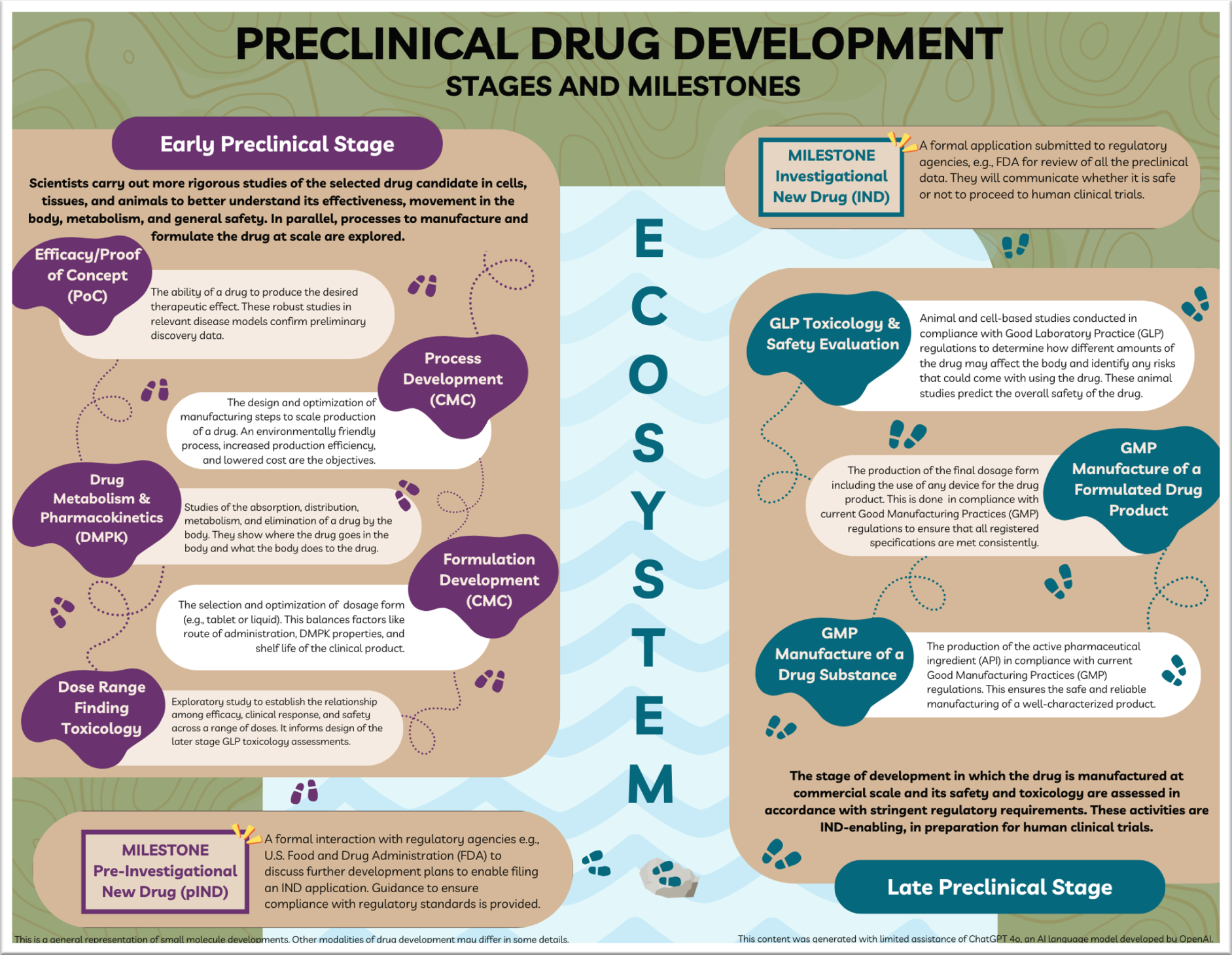
Figure B
![Preclinical Drug Development: Stages and Milestones Infographic. The ecosystem of preclinical drug development, divided into early and late preclinical stages. Emphasis is on the iterative nature of drug development, ensuring regulatory compliance and safety before human clinical trials. Early Preclinical Stage: Scientists carry out more rigorous studies of the selected drug candidate in cells, tissues and animals to better understand its effectiveness, movement in the body, metabolism and general safety. In parallel, processes to manufacture and formulate the drug at scale are explored. Efficacy/Proof of Concept (PoC): The ability of a drug to produce the desired therapeutic effect. These robust studies in relevant disease models confirm preliminary discovery data. Process Development (CMC): The design and optimization of manufacturing steps to scale production of a drug. An environmentally friendly process, increased production efficiency and lowered cost are the objectives. Drug Metabolism & Pharmacokinetics (DMPK): Studies of the absorption, distribution, metabolism and elimination of a drug by the body. They show where the drug goes in the body and what the body does to the drug. Formulation Development (CMC): The selection and optimization of dosage form (e.g., tablet, liquid). This balances factors like route of administration, DMPK properties and shelf life of the clinical product. Dose Range Finding Toxicology: Exploratory study to establish the relationship among efficacy, clinical response and safety across a range of doses. It informs design of the later stage GLP toxicology assessments. Early Preclinical Milestone: Pre-Investigational New Drug (pIND): A formal interaction with regulatory agencies (e.g., U.S. Food and Drug Administration [FDA]) to discuss further development plans to enable filing an IND application. Guidance is provided to ensure compliance with regulatory standards. Late Preclinical Stage includes: GLP Toxicology & Safety Evaluation: Animal and cell-based studies conducted in compliance with Good Laboratory Practice (GLP) regulations to determine how different amounts of the drug may affect the body and identify any risks that could come with using the drug. These animal studies predict the overall safety of the drug. GMP Manufacture of a Formulated Drug Product: The production of the final dosage form including the use of any device for the drug product. This is done in compliance with current Good Manufacturing Practices (GMP) regulations to ensure that all registered specifications are met consistently. GMP Manufacture of a Drug Substance: The production of the active pharmaceutical ingredient in compliance with GMP regulations. This ensures the safe and reliable manufacturing of a well-characterized product. Late Preclinical Milestone: IND: A formal application submitted to regulatory agencies (e.g., FDA) for review of all the preclinical data. The agencies will communicate whether it is safe to proceed to human clinical trials. The stage of development in which the drug is manufactured at commercial scale and its safety and toxicology are assessed in accordance with stringent regulatory requirements. These activities are IND-enabling, in preparation for human clinical trials. This is a general representation of small molecule developments. Other modalities of drug development may differ in some details. Note: This content was generated with some assistance from ChatGPT-4o, an AI language model developed by OpenAI.](/sites/default/files/2026-05/UTD_KG_3_1882x1460.png)
Figure C
Drug Discovery, Development and Deployment Maps
The Drug Discovery, Development and Deployment Maps (4DM) represent the modern therapeutic development process to more easily identify opportunities to expedite it. The maps provide a common framework for discussing the therapeutic development process and serve as an education tool for those who are new to it. They also can facilitate discussions on innovative solutions to existing bottlenecks.
Two versions of the 4DM are available: one for small molecules (Figure A), and another for biologics, using monoclonal antibodies as the representative therapeutic (Figure B). They illustrate some of the unique differences between the development of these products. Both files are licensed to the public under the Creative Commons Attribution-Share Alike International 4.0 (CC BY-SA 4.0) license, which allows use and adaption as long as the user provides attribution and shares any adaptations back to the public under the same license. Read more about the 4DM.
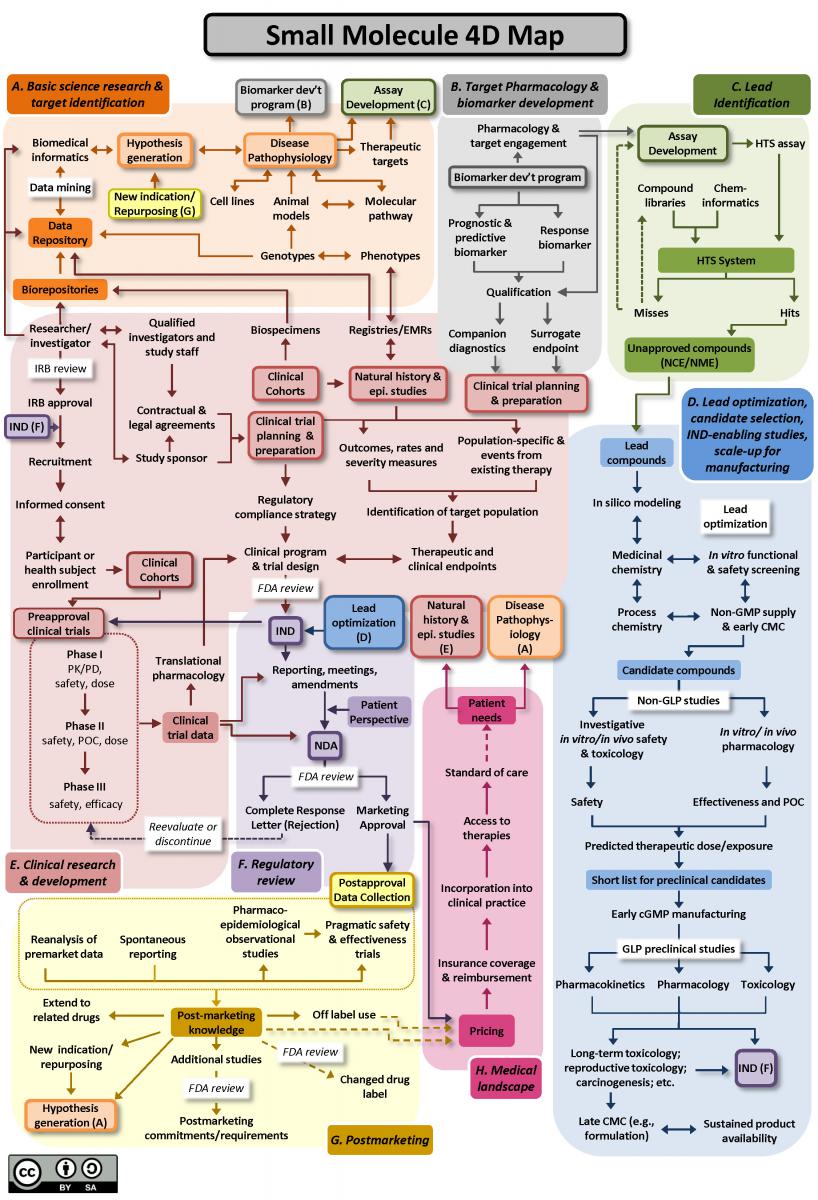
Figure A: Small molecules
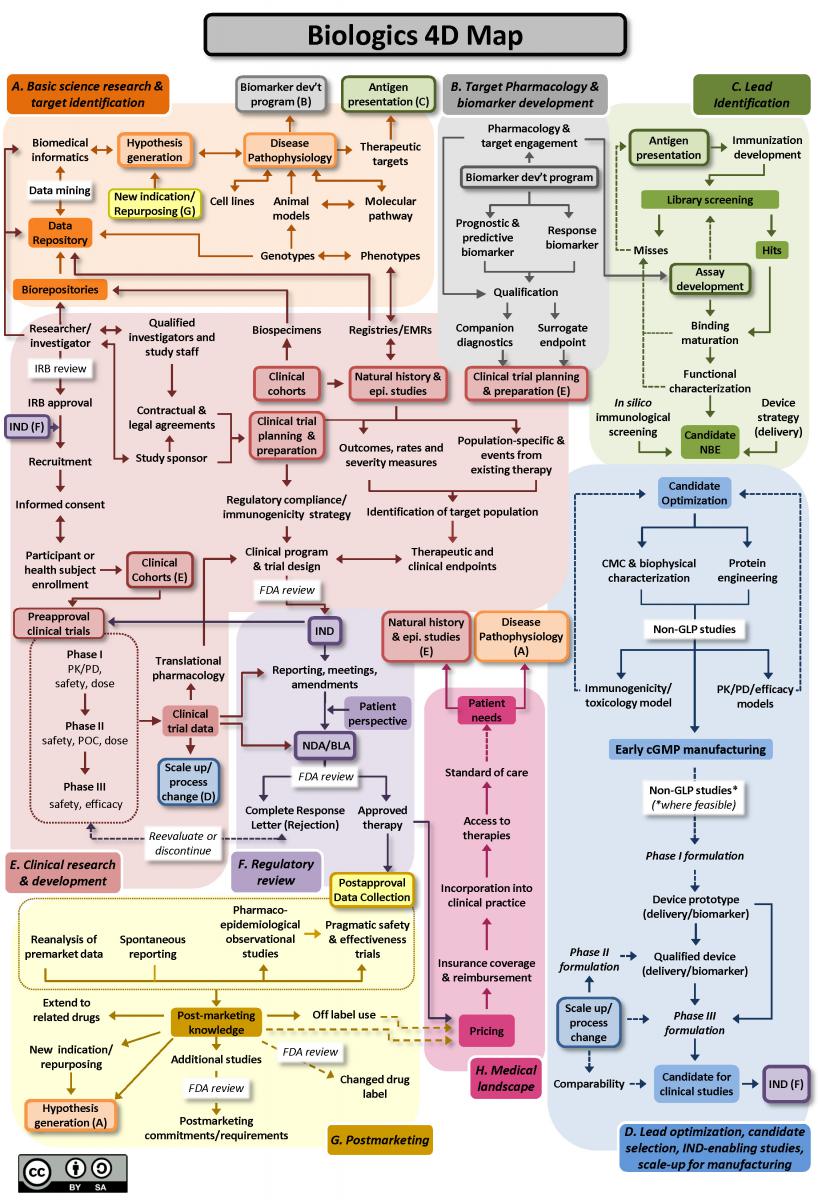
Figure B: Biologics
Translational Scientists
The Role of Translational Scientists
There is tremendous need for people to discover, develop and disseminate the next generation of science and technology to improve human health. Watch the video above to learn more about translational scientists.
Translational Science Characteristics
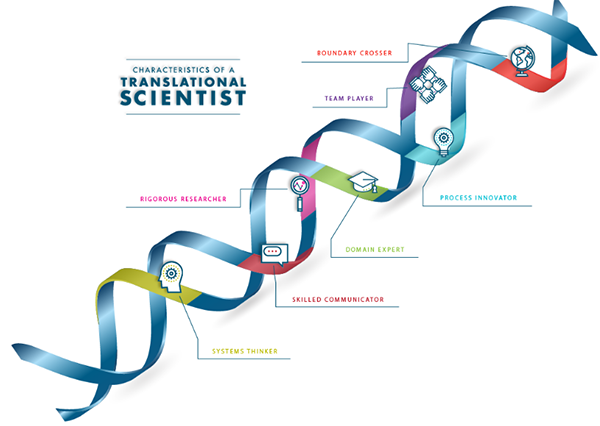
Translational scientists are innovative and collaborative, searching for ways to break down barriers in the translation process.